
Stop Reading Word by Word: Read in Phrases
By IAS Labs by Aptness.ai · 3 min read ·
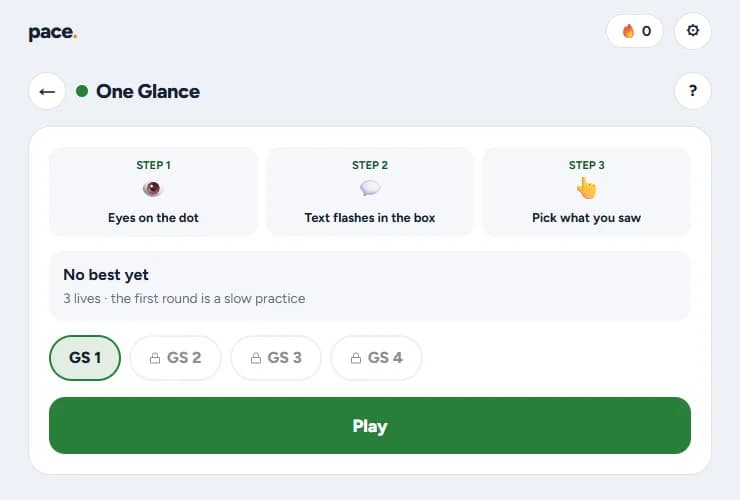
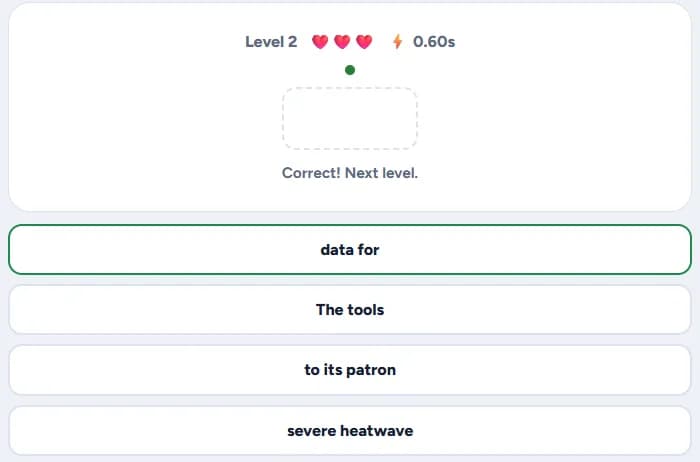
Do you stop on every single word when you read? Most of us do. One Glance trains you to take in a whole group of words in one look.

When to read fast, when to slow down
Slow downA Polity judgment. Numbers in an Economic Survey chapter. A statement-type Prelims question.
Read in phrasesNews you know the background of. A revision pass over your own notes.
How to use it
- Play a few levels as practice.
- Read a news report in phrases, then sum it up in one line.
- Summary wrong? Read it again at normal speed. That's the honest check.
Why we read word by word
Most of us learned to read aloud at school, one word at a time, and the habit stayed. Your eyes can take in a short group of familiar words at once. One Glance gives that a little practice, starting with a single phrase and moving up to two lines.
Practise on your own notes
- Take one page of your notes you already know well.
- Mark it into small groups of 3 or 4 words with light slashes.
- Read it group by group, one look each.
- Close the page and say the main points. If you can't, slow down.
Mistakes to avoid
Don'tUse phrase reading on a new, dense chapter, or skip the check at the end.
DoUse it on familiar text, and always check that you can say what you read.
Quick questions
- Should I read everything in phrases?
- No. Use it for news you know the background of and for revision. Slow down for anything new or full of numbers.
- How long until it feels natural?
- A few minutes a day for a couple of weeks. Keep checking your understanding as you go.
- Will it help in the exam hall?
- It helps you get through long question stems and passages a little quicker. For statement questions, still read every word.