
Art and Culture for UPSC: Dances, Paintings and Temples, State by State
By IAS Labs by Aptness.ai · 4 min read ·
Kuchipudi or Mohiniyattam? Pattachitra or Phad? Art & Culture is the part of Prelims where students say “I’ve read this” and still get it wrong, because every dance, painting and craft is a name tied to a state, and the names blur together.
Why Art & Culture is hard to revise
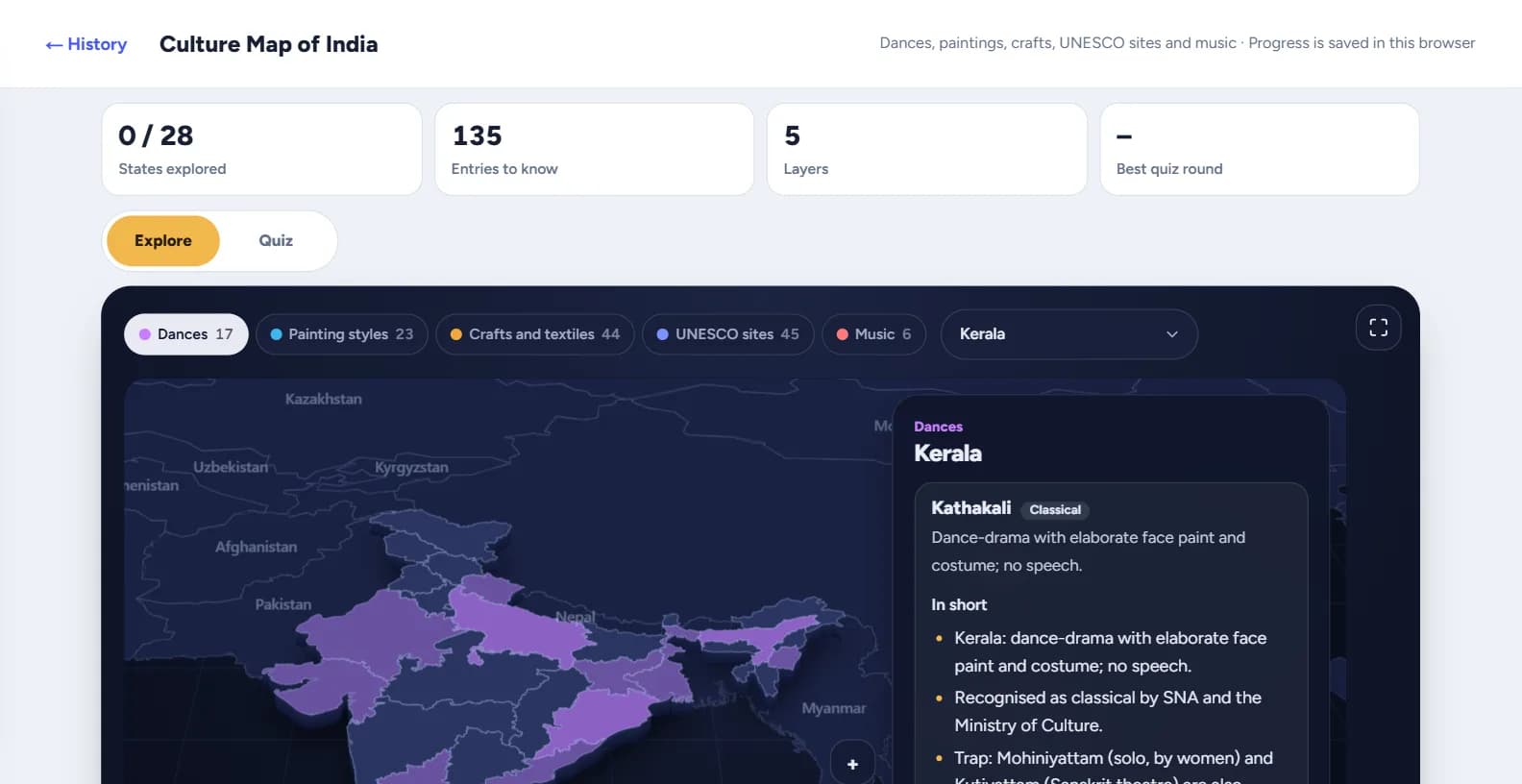
A list says “Kathakali: Kerala” and you nod. Two weeks later, in a question that also has Mohiniyattam and Yakshagana, you can’t say which belongs where. Lists give you the pair once. A map shows you the whole state at once: its dance, its painting, its craft and its heritage sites together. One picture holds five facts.
Five layers, one map
- DanceThe eight classical dances the Sangeet Natak Akademi recognises, plus Chhau, and folk forms such as Garba and Kalbelia.
- PaintingFolk and miniature styles, from Madhubani to Pattachitra and the hill schools.
- CraftHandicrafts and the states they come from.
- MusicTraditions tied to a place, such as Dhrupad and Khayal of Gwalior and the Buddhist chanting of Ladakh.
- UNESCO sitesAll 45 of India's World Heritage properties: 37 cultural, 7 natural and 1 mixed.
Temples: tap the part, learn the name
UPSC loves temple architecture: which style has a gopuram, what an amalaka is, how Nagara differs from Dravida. The Temple Anatomy Explorer draws all three styles. Tap a part and see what it is.
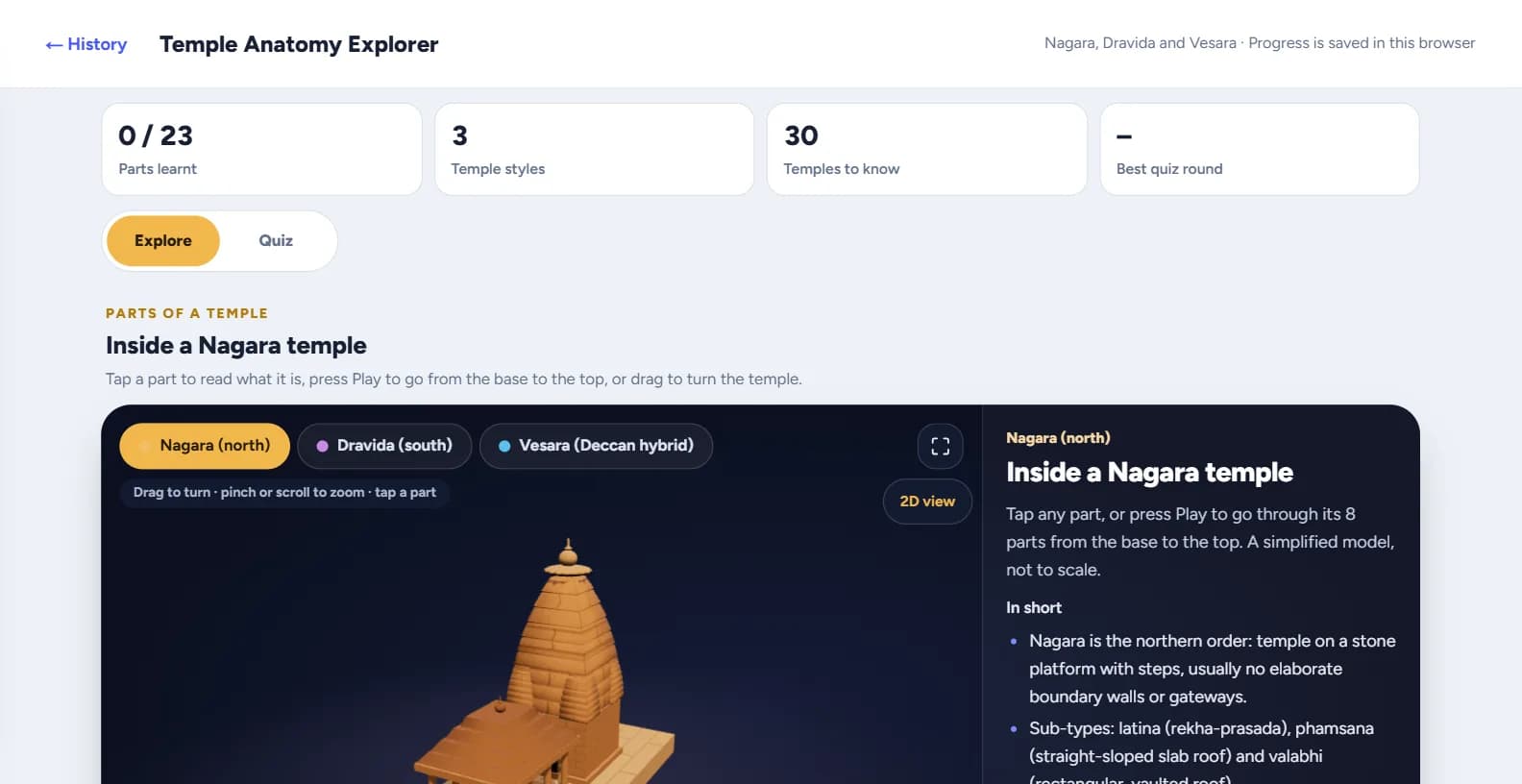
- Nagara (north)A curved shikhara topped by the amalaka and kalasha. Examples: Kandariya Mahadeo at Khajuraho, Lingaraja at Bhubaneswar.
- Dravida (south)A pyramid-like vimana over the shrine, and tall gopurams on the gateways of the walled enclosure.
- Vesara (Deccan)A blend of the two, seen in Deccan temples such as those of the later Chalukyas and the Hoysalas.
Notes vs the Culture Map
Studying from a PDF
Culture Map
- Where it belongs
- A state name next to a dance, in a long list.The state lights up on the map.
- A state's culture
- Spread over five chapters.Every layer for that state in one place.
- Temple parts
- A small black-and-white diagram.Tap each part and read what it is.
- Checking yourself
- Reread the list.Place it on the map, then see if you were right.
Revise one region a week
- Pick a region, say the East: Odisha, West Bengal, Bihar, Assam.
- Turn on each layer in turn and say what you see before you tap it.
- Open the Temple Explorer for the region's temples, such as Konark and Lingaraja for Odisha.
- Do the quiz. Write down every state you got wrong, and start next week with them.
Mistakes to avoid
Quick questions
- Does this cover the whole Art & Culture syllabus?
- No. It covers the parts tied to a place: dances, paintings, crafts, music, UNESCO sites and temple styles. Use it with your NCERT Fine Arts book and your notes.
- Is Art & Culture worth it for Mains?
- Yes. GS 1 asks about Indian heritage and architecture, and a named example, such as a temple and its features, makes an answer stronger.
- Do I need an account?
- Both tools are free with an account. Sign in with Google to open them.