
Ancient and Medieval India for UPSC: Stop Mixing Up the Dynasties
By IAS Labs by Aptness.ai · 5 min read ·
Chalukyas, Cholas, Chandellas, Cheras. Ancient and Medieval India throws hundreds of dynasties, kings and places at you, and they all start to sound the same by the third reading. The fix isn’t reading them again. It’s seeing when and where each one ruled.
Why a list of dynasties doesn't stick
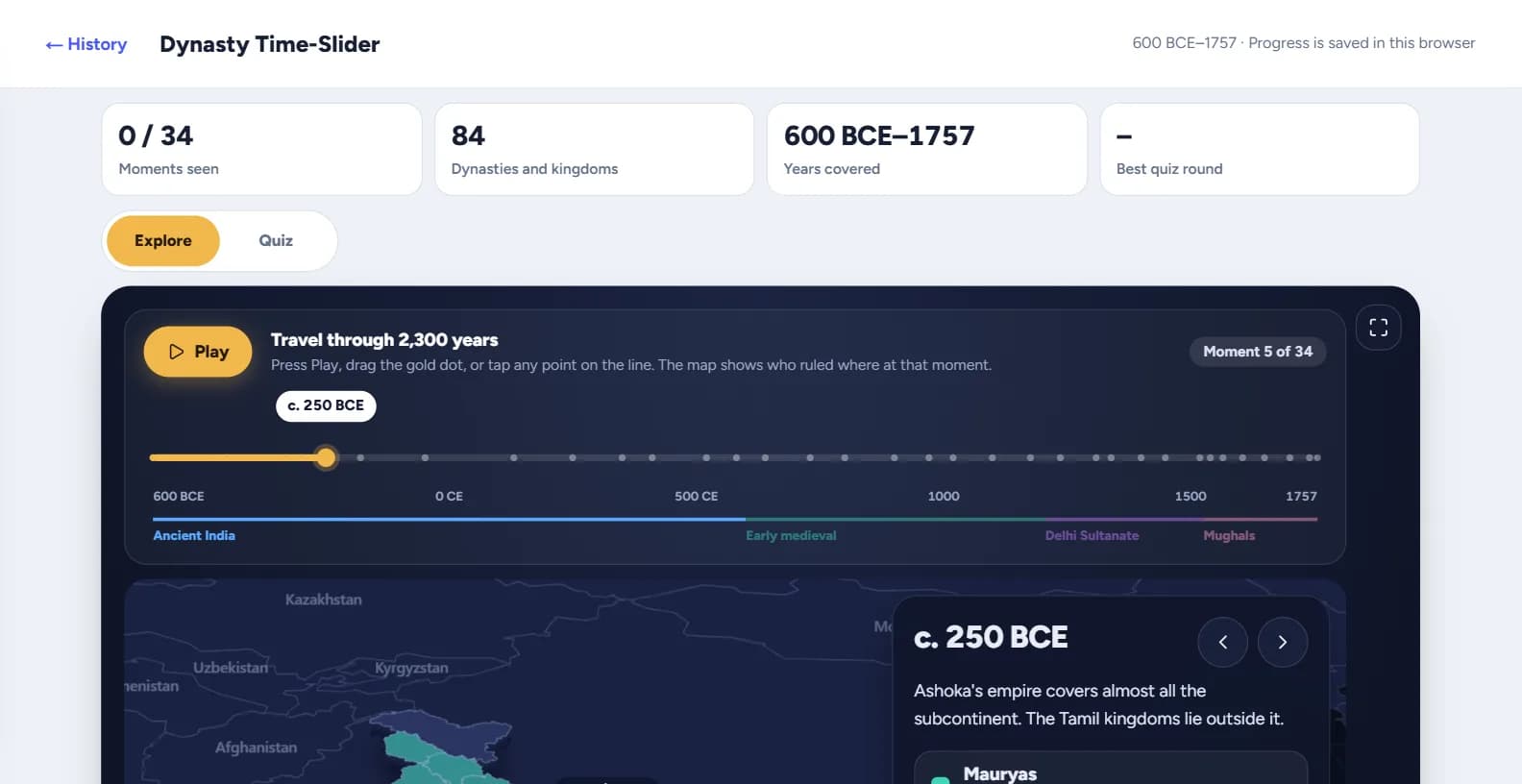
A book tells you about one dynasty at a time, chapter by chapter. But UPSC asks about them side by side: who ruled the Deccan while the Guptas ruled the north? Which kingdom fought the Palas and the Pratiharas? When you read them one by one, you never see them together. On a map with a time-slider, you do.
Ancient India: Harappa to Harsha
- Ancient India Map71 events in six eras, from the Harappan civilisation (c. 2600 BCE) to the Chalukyas, Pallavas and Harsha (c. 700 CE).
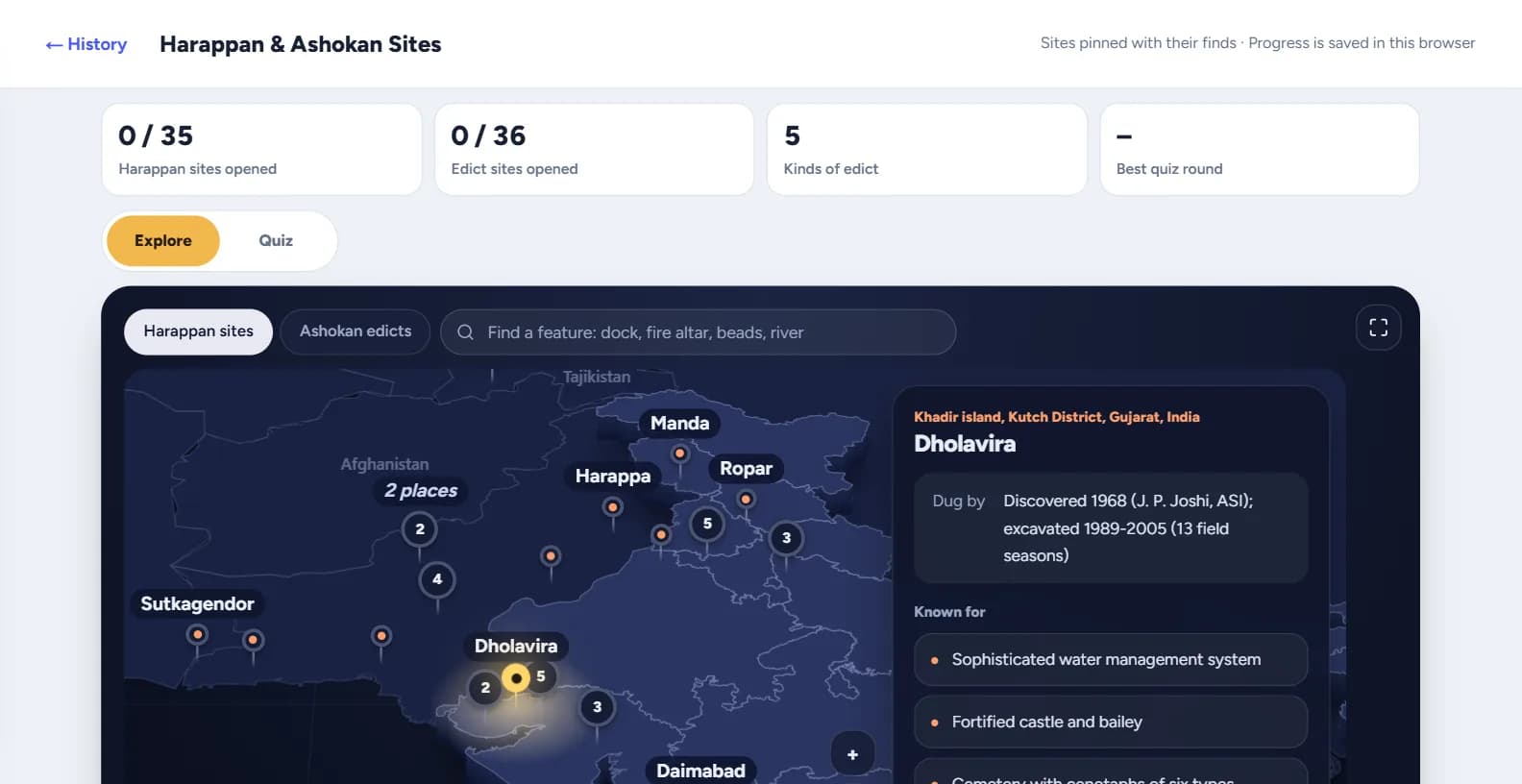
- Harappan & Ashokan Sites35 Harappan sites with their finds, such as Lothal's dock and Dholavira's water system, and 36 Ashokan edicts on the map.
- Buddhism & Jainism TrackerThe Buddha's journey, the four Buddhist councils with their place, patron and outcome, and the Tirthankaras.
- Travellers' Routes15 travellers, from Megasthenes and Xuanzang to Ibn Battuta and Bernier: their routes, the rulers they met and what they wrote.
Medieval India: 700 to 1761
- Regional Kingdoms Map20 events from c. 700 to 1205: the Palas, Pratiharas, Rashtrakutas and the Cholas.
- Delhi Sultanate Map1206 to 1526: the five dynasties that ruled from Delhi, from the early Turkish Sultans to the Lodis.
- Regional States and Bhakti Map20 events from 1206 to 1525: Vijayanagara, the Kakatiyas, the Ahoms and the bhakti saints.
- Mughal Empire Map1526 to 1857: Babur to Bahadur Shah Zafar, reign by reign.
- Deccan and Marathas Map19 events from 1526 to 1761: Talikota, Shivaji, the Sikhs and the Peshwas.
- Dynasty Time-Slider34 stops from 600 BCE to 1757. Drag the slider and see which kingdoms ruled at the same time.
A question you can now answer
Take the Buddhist councils, which UPSC has asked about. On the Buddhism & Jainism Tracker each one is a pin on the map:
- First council, c. 483 BCEAt Rajagriha, under Ajatashatru. The Sutta Pitaka and Vinaya Pitaka were recited.
- Second council, c. 383 BCEAt Vaishali, under Kalashoka. A dispute over monastic rules split the Sangha.
Once you’ve seen Rajagriha and Vaishali on the map, a question like “Where was the second council held?” has a picture behind it.
Book chapter vs the maps
Studying from a PDF
History maps
- Kingdoms at the same time
- Separate chapters, read weeks apart.One slider shows them side by side.
- Where a site is
- A small map in the corner of a page.Every site pinned, with its finds.
- Checking yourself
- Reread the chapter.Quick questions after every era.
- What UPSC asked
- Search old papers yourself.Real PYQs under "How UPSC asks this".
Revise one era in 20 minutes
- Open the era on its map, such as the Ancient India Map or the Regional Kingdoms Map, and press Play.
- Drag the Dynasty Time-Slider through the same years. Say which kingdoms ruled together.
- Open the sites of that era: Harappan sites, Ashokan edicts, or the travellers who came then.
- Answer the questions, then the real PYQs. What you get wrong is your list for next time.
Mistakes to avoid
Quick questions
- Is this enough for Ancient and Medieval History?
- No. Your NCERTs and notes are where you learn. These tools help you revise and connect what you learnt, and check yourself with questions.
- Are the dates exact?
- Ancient dates are often approximate, so the tools mark them with "c.", as the books do. The shading on the slider is a rough guide, drawn on today's state lines.
- Do I need an account?
- The tools are free with an account. Sign in with Google to open them.