
IPC to BNS: The New Criminal Laws for UPSC, Connected to the Constitution
By IAS Labs by Aptness.ai · 4 min read ·
Since 1 July 2024, the IPC, the CrPC and the Evidence Act are gone. The Bharatiya Nyaya Sanhita, the Bharatiya Nagarik Suraksha Sanhita and the Bharatiya Sakshya Adhiniyam took their place. Every textbook, every judgment and every news story you read still says “Section 302” or “124A”. UPSC will expect you to know both.
Old number, new number
The fastest way into the new codes is through the sections you already know:
- MurderIPC 302 is now BNS 103, and mob lynching is named in the law.
- SeditionIPC 124A is gone. BNS 152 punishes acts endangering India's sovereignty, unity and integrity.
- Cruelty to a married womanIPC 498A is now BNS 85–86.
- FIRCrPC 154 is now BNSS 173, with Zero FIR and e-FIR.
- Arrest without warrantCrPC 41 is now BNSS 35.
- BailCrPC 436–439 is now BNSS 478–483.
Some provisions are new, with no old number at all: the terrorist act in BNS 113, sexual intercourse by deceitful means in BNS 69, and trial in absentia in BNSS 356.
Why it's tied to Polity
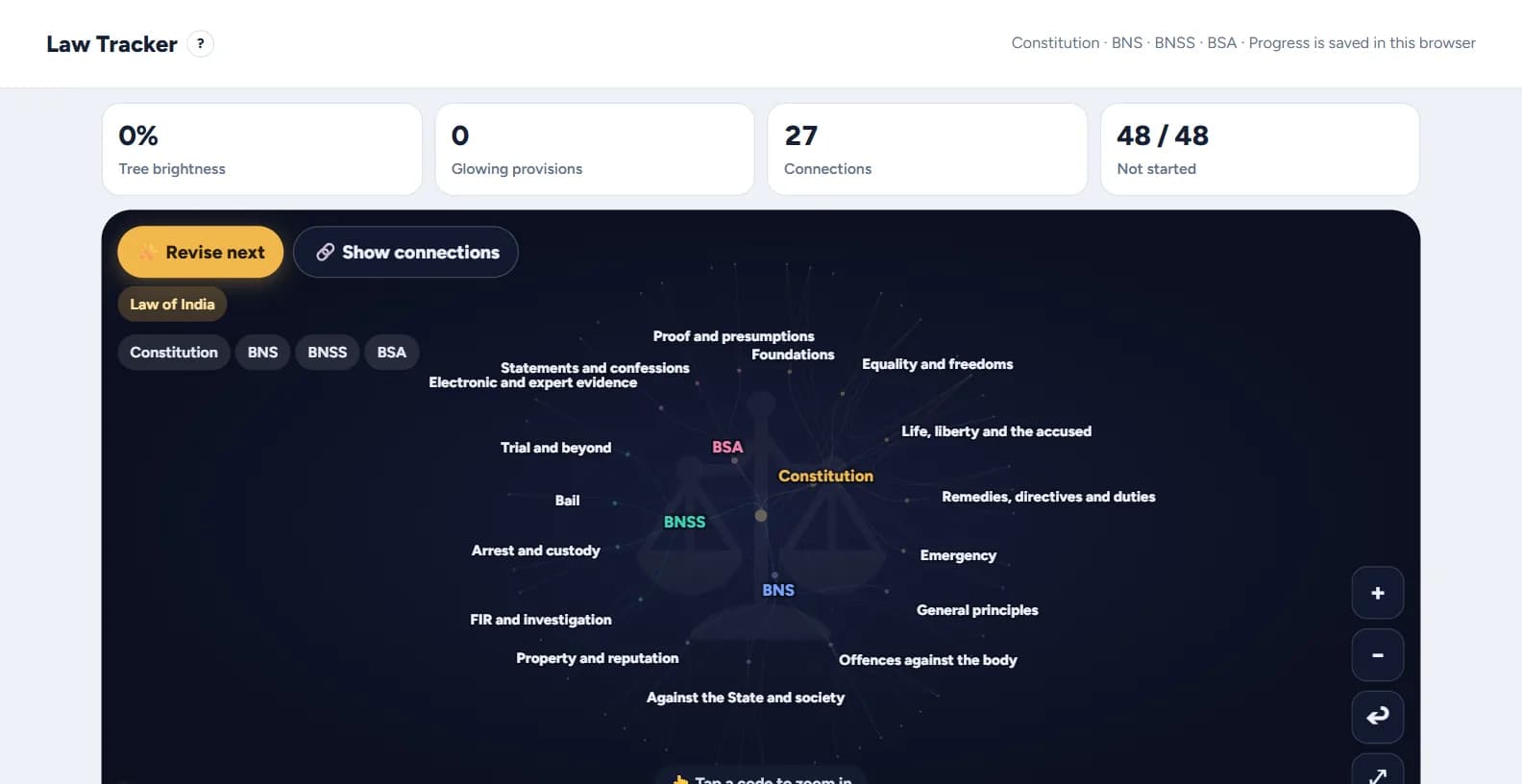
Criminal law is where the Constitution meets the citizen. Article 21 is why arrest has rules. Article 22 is why you’re produced before a magistrate within 24 hours. The Law Tracker draws those links, and each one says why it exists:
- Article 21 and Article 14Maneka Gandhi (1978) joined them: a procedure must be fair, just and reasonable.
- Sedition and free speechKedar Nath Singh (1962) limited sedition to incitement to violence. In 2022 the Supreme Court put IPC 124A in abeyance.
- Bail and undertrialsHussainara Khatoon v. State of Bihar made speedy trial a part of the right to life.
Bare Act vs the Law Tracker
Studying from a PDF
Law Tracker
- Old and new numbers
- A long comparison table to look up.Both numbers on every provision.
- What changed
- Read three new Acts in full.What's new, in a few lines.
- Cases
- A separate case-law book.The landmark cases on the provision itself.
- Link to Polity
- You connect it yourself.Connections, each with a reason.
How to use it for Prelims and Mains
- For Prelims: learn the big changes (sedition, terrorism, mob lynching, Zero FIR, trial in absentia) and the old numbers people still quote.
- For Mains GS 2: use the connections. Questions on police reform, undertrials or free speech need a constitutional argument and a case.
- Answer the questions on each provision before you move on.
Mistakes to avoid
Quick questions
- Does UPSC ask about the new criminal laws?
- They came into force in July 2024 and replaced laws that run through Polity and Governance, so they are fair game for both Prelims and Mains GS 2.
- Does it cover every section?
- No. It covers 48 key provisions, the ones that matter for UPSC, along with the Articles they connect to.
- Is it free?
- Yes. The Law Tracker is free, and you can try it right here without an account.