
UPSC Economy Without the Fear: Learn It as One Town
By IAS Labs by Aptness.ai · 5 min read ·
For many UPSC aspirants, Economy is the subject that scares them most. Repo rate, CRR, current account, FPI, buffer stocks: it feels like a language nobody taught you. But every one of those words is about something real you’ve seen: a ration shop, a bank, a port, a farm.
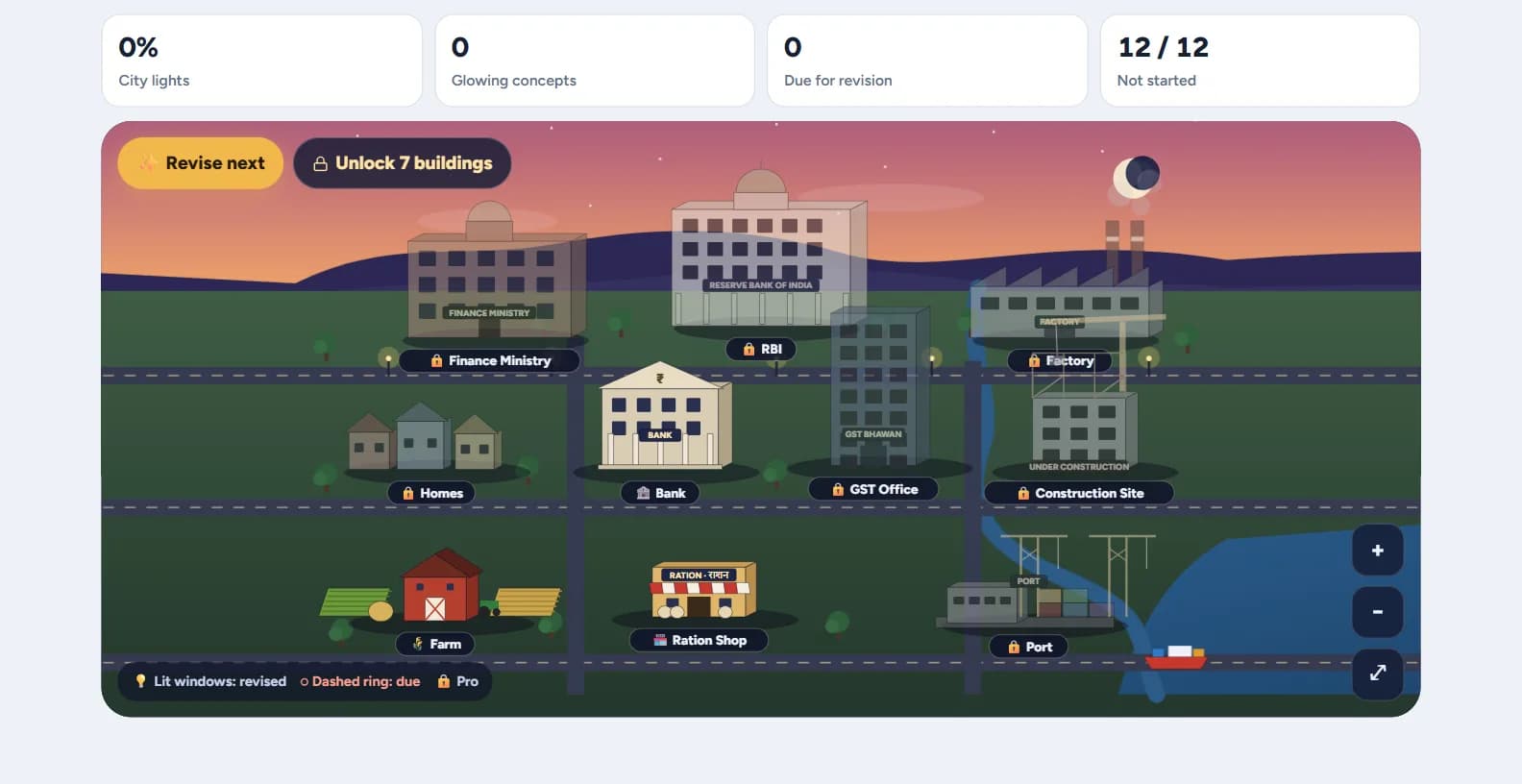
The town and what's in it
- FarmMSP, crop insurance (PMFBY), e-NAM, farm credit and PM-KISAN.
- Ration ShopThe National Food Security Act, free grains under PMGKAY, the FCI and buffer stocks, One Nation One Ration Card.
- BankBank nationalisation and mergers, NPAs and the IBC, priority sector lending, financial inclusion and UPI.
- And seven moreThe RBI, the Finance Ministry, the GST Office, a Factory, the Port, a Construction Site and Homes.
Each concept has a short card and quick questions. Get them right and the building’s windows light up. When a concept is due for revision, a dashed ring appears around it.
See what the RBI's levers do
The Monetary Policy Simulator has the RBI’s seven levers: the repo rate, CRR, SLR, the SDF rate, the MSF rate, the Bank Rate and open market sales. Raise one and see which way liquidity, lending rates, inflation and growth move.
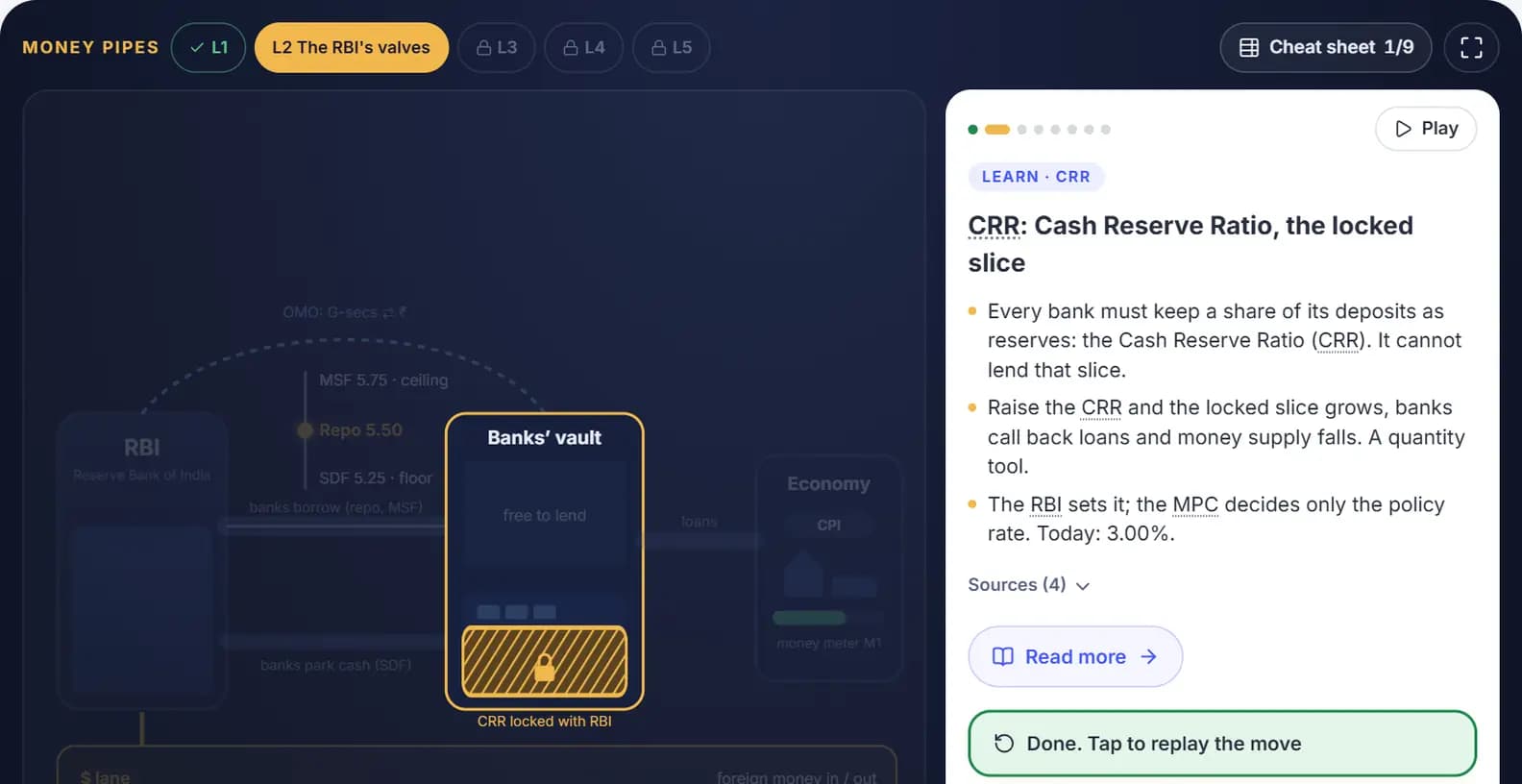
It also has 16 traps. One of them, from a past paper: “Raising the MSF rate is part of an expansionary monetary policy.” False. A higher MSF rate makes emergency money dearer for banks, so it’s a tightening step.
Two sorters for easy Prelims marks
- Balance of Payments Sorter36 real transactions to sort into nine boxes, from goods and services to FDI, FPI, ECBs, NRI deposits and reserves. "India imports crude oil from Iraq" is a debit in goods.
- Reports & Indices MatcherMatch 42 reports and indices to the bodies that publish them. The World Economic Outlook is the IMF's; Global Economic Prospects is the World Bank's.
Textbook vs Economy City
Studying from a PDF
Economy City
- What a term means
- A definition to memorise.A building you can picture.
- The big picture
- Separate chapters, read weeks apart.One town, every part of the economy side by side.
- Cause and effect
- Read that a rate cut "boosts growth".Move the lever and watch it happen.
- Checking yourself
- Reread.Quick questions, and the town lights up.
A 20-minute Economy routine
- Revise one building in Economy City. Say what each concept is before you open its card.
- Five minutes on one lever in the Monetary Policy Simulator: say the effect, then move it.
- One round of the BoP Sorter or the Reports Matcher.
- Link it to the news: when the RBI changes a rate, open the simulator that day.
Mistakes to avoid
Quick questions
- I don't have a commerce background. Will this help?
- That's who it's for. Economy City starts from places you know, like a ration shop and a bank, and builds up from there.
- Are the policy rates current?
- Each lever shows its latest value, with the date and the RBI statement it comes from. Rates change often, so check the newest one before your exam.
- What's free?
- Three Economy City buildings are free, with no account. The Monetary Policy Simulator, BoP Sorter and Reports Matcher are free with an account. The other seven buildings come with Pro.