
Environment for Prelims: Protected Areas, Species and Treaties, Sorted
By IAS Labs by Aptness.ai · 4 min read ·
Prelims 2026 asked about Madhav National Park: declared a tiger reserve in 2025, with Sakhya Sagar a Ramsar site inside it. Environment questions are like that every year. They take a place or a species from the news and test exactly where it is, what it’s protected as, and under which treaty.
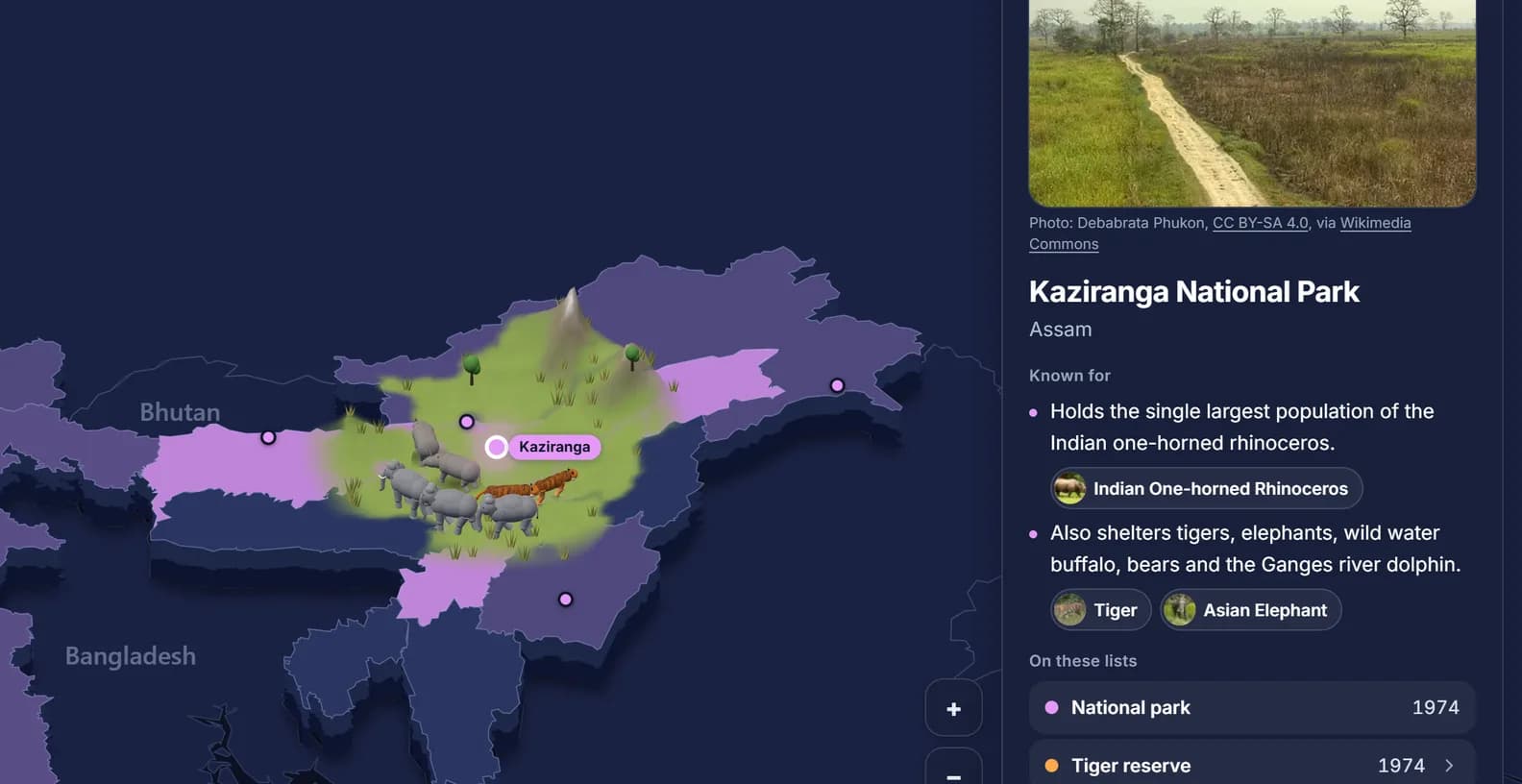
Why Environment needs sorting, not reading
Most Environment questions ask you to match: a site to its state, a species to its status, a protocol to its convention. Reading builds familiarity, and familiarity is exactly what the wrong options use against you. What helps is having each fact in a fixed place: a pin on a map, a line on a card, a point on a timeline.
Protected areas, by state
- Ramsar sites · 103Wetlands of international importance, from Chilika and Loktak to the newest additions.
- Tiger reserves · 58With the year each was notified.
- National parks · 46The ones UPSC asks about, with what each is known for.
- Biosphere reserves · 18Including those in UNESCO's World Network of Biosphere Reserves.
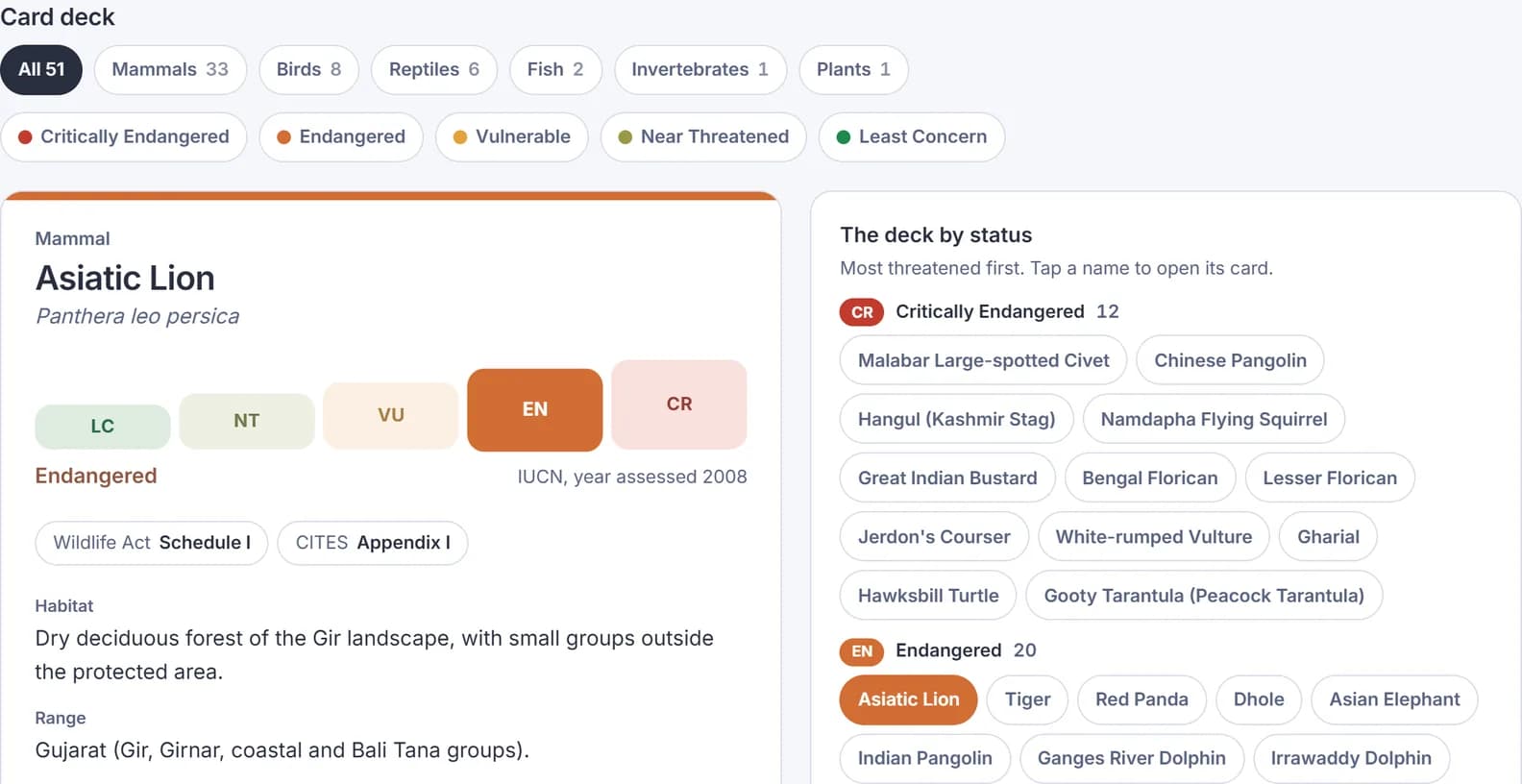
One card per species
Species Cards put everything Prelims asks about an animal in one place:
- Great Indian BustardIUCN Critically Endangered. Wildlife Act Schedule I. CITES Appendix I. Fewer than 250 mature birds are left.
- GharialIUCN Critically Endangered. Schedule I. Appendix I. The Chambal holds the main breeding population.
- Snow LeopardIUCN Vulnerable. Schedule I. Appendix I.
Treaties and the protocols that came from them
UPSC loves the pairs. The Conventions Timeline keeps them together:
- Vienna Convention → Montreal Protocol (1987)The ozone layer, then the substances that harm it.
- Montreal Protocol → Kigali Amendment (2016)HFCs added to the phase-down.
- CBD → Cartagena Protocol (2000)Biodiversity, then biosafety of living modified organisms.
- UNFCCC → Kyoto Protocol (1997)Climate change, then binding targets for rich countries.
Notes vs the Environment tools
Studying from a PDF
Environment tools
- Where a site is
- A list of names by category.A pin on the map, by state.
- A species' status
- Three lists to cross-check.IUCN, Schedule and CITES on one card.
- Treaties
- A table of dates.A timeline, with each protocol under its convention.
- What UPSC asked
- Find PYQs yourself.Real PYQs under "How UPSC asks this".
A week of Environment
- Monday and Tuesday: one state a day on the Protected Areas Map. Name each site before you tap it.
- Wednesday: ten Species Cards. Say all three statuses before you turn the card.
- Thursday: the Conventions Timeline, one family at a time: ozone, biodiversity, climate, chemicals.
- Friday: every place and species from this week's news. Find it on the map or the cards.
Mistakes to avoid
Quick questions
- How current are the lists?
- The Protected Areas Map shows the date its list was last checked. Ramsar sites and tiger reserves are added often, so check the newest ones in the news.
- Does it help with Mains GS 3?
- Yes. A named site, species or treaty makes a conservation answer concrete.
- Do I need an account?
- The three tools are free with an account. Sign in with Google to open them.